Friday, 4 October 2013

Modifications to Cambridge Swift Tower

This year, summer 2013, was the 3rd year of trying to entice Swifts to occupy the Cambridge Swift Tower. We upgraded the attraction call player to a higher quality, louder, system based on the Cheng Sheng player amplifier, powered by a 12 volt car battery charged with a 20 watt solar panel.

Written by Dick

In 2011 and 2012 we played attraction calls using a bird scarer programmed with Swift calls. The sound quality was not great and, in 2012 particularly, proved to be quite unreliable. However, in both years, we had Swifts circling the tower and sometimes approaching quite close to the boxes.

In 2013 we progressed to having Swifts making contact with the boxes, sometimes clinging on, but still failng to find the entrances. They seemed to be focused on trying to get into the horizontal gaps between the boxes, where there was no way in. 2 pairs of Starlings also occupied boxes in the tower, probably because the entrance sizes had crept above 30mm.

The back of the tower, showing some boxes
extending beyond the box below
Of the 221 boxes in the 'African Sun', 88 had entrances for Swifts and 10 had entrances for bats. There were also 36 unassigned boxes which extended beyond the box below. Thus we could add a whole new class of entrance in these boxes, by cutting a hole in the underside of the rear.

We have succeeded in making this enhancement in 9 boxes so far, increasing accommodation for Swifts to 97 boxes, without affecting the appearance of the tower at all. We hope these new entrances are similar to what Swifts are accustomed to in natural sites. A nest concave was placed in all of these new boxes.

You can see the current assignment of the nest boxes here.

The project team was:
Guy Belcher, Clarke Brunt, Alan Clarke, Bill Murrells, Dick Newell and Bob Tonks

Sunday, 15 September 2013

The Possibility of a Swift Conference in Cambridge 8th to 10th April 2014

UPDATE 23rd November
Interest has been such that the conference is now at capacity. As a result, new people will be put on 'standby'. We are working on the program, and when that is done, we will invite those who have registered an interest to formally enrol, with payment.

Update 22nd September - the response is so good that we are now committed to the Cambridge International Swift Conference and you can read all about it on:

Following two very successful International Swift Conferences in Berlin in 2010 and 2012, the next one was to have been in Tel Aviv in 2014, which unfortunately has now been cancelled.

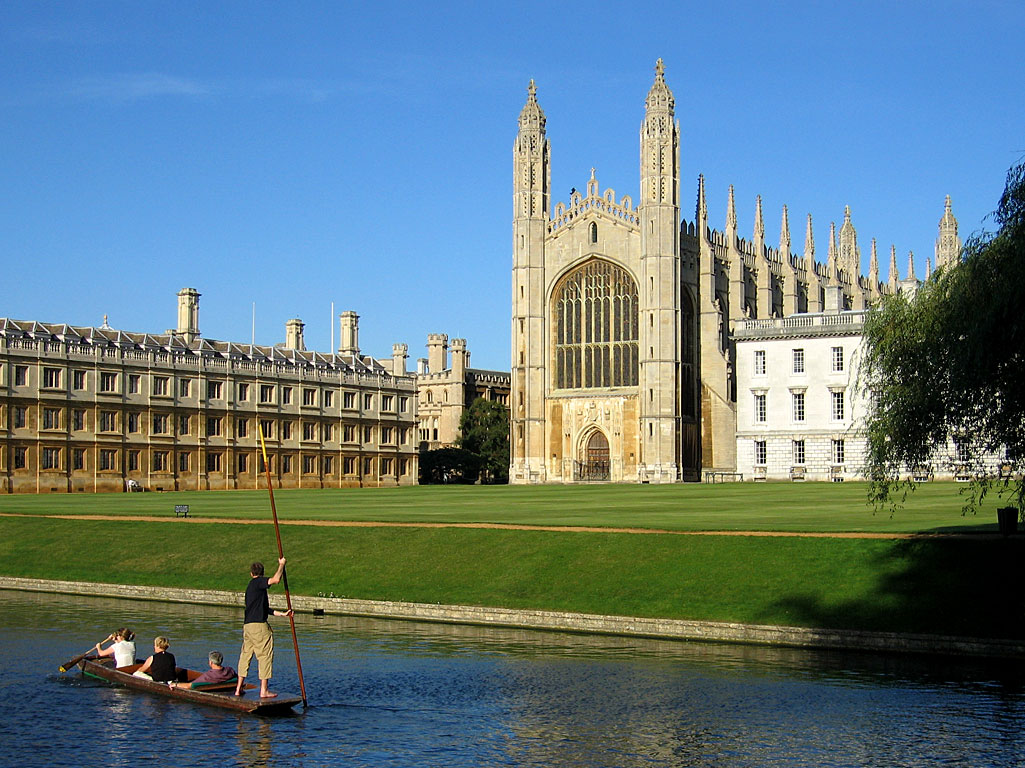
Kings College Chapel, Cambridge         ©wikipedia
You may have heard that some of us Swift enthusiasts here in the UK have been thinking whether we could run a conference as a replacement for the cancelled one in Tel Aviv.

Our proposal is to hold an International Swift Conference in Cambridge, UK.

Cambridge is an attractive and historic city, easy to reach from London (one hour by train), as well as from all the main London airports and the ports of the UK's East Coast.

We have provisionally booked a hall, large enough for 120 people, in a school near central Cambridge.

Could you please tell us as soon as possible:

  1. Would you be interested in attending a conference in Cambridge, held over three days from 8th to 10th April 2014
  2. Would you like to speak on a topic, and
  3. Have you any topics that you would like to hear about?

Just three questions and three easy answers!

Please reply to Edward Mayer and Dick Newell

Sunday, 25 August 2013

Swift Bricks

Written by Dick

Accommodation for Swifts built in to buildings is to be preferred to accommodation retrofitted on the outside. Planning departments  are now conditioning new developments and renovations to provide space for wildlife in the interests of biodiversity: bats, House Sparrows, Starlings and Swifts.  We have produced a downloadable pdf with all of the Swift bricks that we have found so far, with pictures, a table of dimensions and approximate prices. This has now been taken on by the RSPB and Swift-Conservation as a good way to promote Swift Bricks.


Here are a few examples to whet your appetite:

Birdbrickhouses
This is a box designed so that the replaceable front can be matched with any existing brickwork. We reviewed it here


CJ Wildlife Woodstone 
This is one of 3 models that CJ Woodstone supply, the others you can see on their website. The one illustrated here is the 90068.


Ecosurv 
The front can be custom made to match any bricks. There is another version with the entrance 1 brick lower.


Ibstock
An attractive brick, designed to encroach minimally on the cavity. We have an account of an early success here.


Schwegler
Perhaps the oldest established company in the Swift brick business. There are a number of designs in their catalogue, including the Cavity Panel. Schwegler boxes have been very successful for Swifts.
The one illustrated here is the 16S.


Hanson clay air brick liner 
The model 401 makes an attractive, low cost Swift brick. We wrote up how to make and install it here, and Swifts seem to like it.
(Scroll to page 9 on the PDF)


Monday, 19 August 2013

BTO Breeding Bird Survey Report 2012

The BTO/JNCC/RSPB BBS report for 2012 is now published; you can download and read it here. 

by Dick

It is a good read representing the results from 3,430 randomly allocated 1km squares. Each square is surveyed twice, the early surveys, in April to mid May, are likely to record fewer Swifts than the later ones in mid May to late June when the Swift population is at its peak.

Unlike song birds, Swifts recorded in a 1km square, out in the country, are unlikely to be breeding in that square. Indeed, they are almost as likely to be non-breeders as breeders, but one hopes that the frequency of occurrence of Swifts during BBS surveys is a good proxy for the general population level. For Swifts it is more a total population level index than a breeding bird index.
BBS Index for Swift, UK, 1994 - 2012
Index values are scaled so that the smoothed index in 1995 is 100
The results presented for Swift for the whole UK record a decline of 39% between 1995 and 2011, then an increase of 20% between 2011 and 2012.

So the 2011 UK population is estimated at 61% of the 1995 population. Note that this is calculated from the values behind the smoothed red trend line. The years 1994 and 2012 are not used as the smoothed values at the extremes are not considered reliable. Thus we have scaled the graphs so the smoothed index value in 1995 is set to 100.

Although the 2012 annual index is 120% of the 2011 one, it would not be appropriate to multiply the 2011 smoothed value by 120%, as the 120% figure comes from the annual index values

See BBS 2012 report for confidence limits
The numbers are also presented for 3 of the 4 UK countries, there was not enough data for Northern Ireland.

However, all of the numbers in this table have wide confidence limits, so we will have to wait for 2013 and beyond for smoothed index values in 2012.

It is tempting to speculate that the long wet summer of 2012 forced Swifts out into the countryside to feed in areas where there were BBS survey squares. However, this does not explain the situation in Scotland.

Thank you Kate Risely, BBS National Organiser, for providing the data for the graphs.

Saturday, 17 August 2013

Nest Recording of Swifts in Boxes with Cameras

The increasing number of people with cameras in Swift nest boxes provides a great opportunity to obtain high quality nest records for the BTO. This could help to reverse the decline in numbers of Nest Record Cards for Swift in recent years

Written by Jake & Dick

The BTO's Nest Record Scheme provides important information about changes in populations over time, based on such factors as average egg laying date, clutch size, incubation and fledging period, and hatching and fledging success rates.


Nest record cards for Swift recorded each year
showing the recent decline (click graph to enlarge)
3 chicks with large primary feathers
(can you spot the 3rd one?)
We know there is an ongoing decline in the population of Swifts in this country, so it is important to collect data on breeding success rates, but no more than a hundred nest records are received each year, and this number has halved since 2010.

Historic data would be extremely valuable in helping to combat the dearth of records in recent years.

Moreover, the information on the cards is generally minimal, possibly no more than the record from a single visit.


Even with multiple visits, The BTO has to make intelligent inferences to determine egg laying, hatching and fledging dates. With cameras in boxes, there is the potential to determine the timing precisely of all of these events without any guesswork.


Example nest record card
Nest recording is not an arduous task, though the more you record, the better. The optimum would be to produce a series of up to 10 dated observations detailing the first sighting of an egg in the nest, the maximum clutch size and when it was first observed, the date of first hatching, the number of chicks present at approximately weekly intervals, together with their stage of development, and the timing of any failures or successful fledging.

In the (real) example shown here, we knew everything from the date the parents arrived, when the eggs were laid, when the eggs hatched, when the chicks fledged, and finally when the parent left for Africa. In this case, one parent went missing on 4th July. [The parent that survived carried a geolocator to Africa in 2011 and has returned since then.]

Note that although the instructions say that further visits should be included on continuation cards, the BTO nest record software cannot deal with more than 10 visits, meaning that all of the most essential information should be squeezed onto the first card.

In this example, we have inserted the last time there were 2 eggs, just before there was 1 chick This helps the BTO's algorithms to pin down the hatching date exactly. Because of the 10 visit restriction, we have not recorded the dates that the parents arrived on the card.

If you know that you will be unable to watch the camera for a period, record the last state of play, including nest contents, primary feather length etc. as well as the position on your return. See this pdf link, also referenced below, for how to describe chicks.

Anyone who would like to contribute can get in touch with the BTO at nrs@bto.org to register as a nest recorder and receive the necessary instructions and blank cards. It is essential that the data is submitted on these cards, as the BTO cannot handle any other format.
[ we understand that there will eventually be a web-based system]

If you already have such information recorded from previous seasons, it is an easy matter to transfer it to Nest Record Cards using the standard BTO codings.

For a fuller description of how to record Swift nest records download this pdf, written by Vince Lea.

We thank Dave Leech, BTO Senior Research Ecologist NRS, CES & RAS, for suggested improvements to this post.

BTO url: http://www.bto.org/volunteer-surveys/nrs/taking-part

Thursday, 1 August 2013

South Cambs District Council - nest box initiative

South Cambs District Council, under the leadership of ecology officer Rob Mungovan, is particularly active in providing nest-boxes for Swifts.

This is best exemplified by their highly successful deployment of 250 Swift boxes on the Swifts estate in Fulbourn.

Now, seeing the threat to cavity nesting wildlife from government sponsored insulation schemes, they have a new initiative.

Click on either image and read for yourself.
Or you can download a pdf here

Friday, 26 July 2013

Micklemere Nature Reserve Swift Tower

Swift towers are becoming more popular, even though, as a concept, it remains to be proved how effective they are. In order to keep costs down, the well proven design of a Barn Owl A-frame box was adapted to contain 11 nest-boxes, 7 entrances in the front and another 4 in the lower sides.


Final assembly of the tower on its pole
The Micklemere Swift tower is made of 15mm marine plywood, with an additional roof made of well-treated feather board. The double roof is designed to protect the nest-boxes from the weather, both rain and sun.

The box was mounted on a substantial 8 metre telegraph pole, 1.5 metres of which was in the ground.

Heavy lifting gear is used to lift the pole
Micklemere Nature Reserve is run by Suffolk Wildlife Trust which is one of a number of reserves managed by Will Cranstoun.

Will is blessed with a team of keen and competent volunteers who did a great job making the tower, and then helping to get it erected.


The trust already had a stock of suitable timber, as well as a spare telegraph pole, so this kept costs down.

The tower is up. Photo Judith Wakelam
Micklemere also has a number of generous donors and sponsors who provided funds, most of which was required for the sound system, which will need to be played in the coming years to attract Swifts into the boxes.

The sound system is based upon the Cheng Sheng player amplifier, 12 volt battery and solar panel charger. [described here and here].

It may be necessary to keep this going from May to July, through daylight hours, for a number of years to be sure of attracting Swifts into the tower.
This is a great example of a larger organisation, the Suffolk Wildlife Trust, getting behind the project, competent management on the ground, and a team of willing and able volunteers to make it happen.

Photo Judith Wakelam


Design model for Micklemere tower

Monday, 22 July 2013

Temperature experiment

It is generally thought to be not a good idea to place Swift nest boxes in direct sunlight. But this experiment shows that acceptable temperatures can be maintained in the sun.

by Dick

With the recent hot weather, I thought it worth rerunning an experiment I did a few years ago by making a direct comparison of a John Stimpson Zeist box, made of 12mm plywood, with one modified with an additional roof. I replaced the original roof with a close fitting piece of ply, then I spaced the original roof off this by using 3 strips of ply. I didn't bevel the new roof, as it conveniently provided 2 small triangular ventilation holes. I then painted it white. Both boxes were placed side by side in the sun and 2 max-min thermometers were placed inside at the ends furthest from the entrances.

The boards on top of the boxes are intended to simulate the shading effect of narrow eaves.
A view end on, showing the additional roof and air gap.
And the result is that the additional white roof reduces the temperature by up to 5°C. On 3 different days, I recorded maximum temperatures of 31.8 vs 37.0°C, 36.8 vs 42.1°C and 34.6 vs 38.4°C.

Part of this effect is the white paint - it certainly feels a lot cooler than the unpainted wood, and part is the shading effect and the air gap between the 2 layers of plywood.

The additional roof not only defends the box from the sun, but also from the rain, which is important for a wooden box.

We actually described this idea some years ago here and here

#temperature

Sunday, 21 July 2013

The Worlington Swiftfest

When the Swift nest boxes in All Saints church tower, in the small Suffolk village of Worlington, were inspected in 2012, we were pleasantly surprised to find 7 occupied nest-boxes, up from 2 the previous year. So the idea was floated of having a Swift evening in 2013 for the people of Worlington to come and be informed about their Swifts. Cameras had been installed in 2 of the nest boxes before the Swifts returned in May, and both had chicks.

by Vida Newell

The date was set for 17th July, a date of peak Swift activity. Displays and exhibits were assembled in the church. Before people arrived, Bob Tonks and Simon Evans inspected the boxes to find 11 occupied, with 8 chicks in 5 of them (only 5 because Swifts do not normally breed in their first year of occupancy). And the single egg in the 2nd camera box had hatched the previous night.

Part of the exhibits, showing the Trumpington Orchard swift tower,stories about Swifts, nest boxes
and nest bricks and a Swift mobile (top right). Photo Judith Wakelam
Organisation, displays and publicity for the event, principally by Judith Wakelam and Don MacBean, together with refreshments provided by Ellen Clowes with help from other church members, attracted an unbelievable turn out. Suffolk Wildlife Trust did a great job publicising the event.

About 200 people turned up to see the exhibits, to watch the TV monitors, to hear Dick Newell say a few unscheduled, but well-received, words (twice because so many more people arrived after the first time) and to enjoy the Swift spectacle outside, which, on this night, was particularly stunning. The TV monitors were particularly entertaining when an adult returned to feed its chicks.

John Stimpson put on an impressive display of nest boxes for many species, from hedgehogs to Barn Owls, and he ended up selling his complete stock of Zeist Swift boxes.

Television monitors on 2 nests with chicks and a map of the track taken by a Swift from Landbeach
that carried a geolocator to Africa and back. Photo Judith Wakelam
Worlington church proved to be a wonderful location for an event like this. The tower is not high, so to see 20 to 30 Swifts charging around, no more than a few metres above our heads, was particularly enthralling. The format and environment was an ideal way to get the message across to people about Swifts, their problems and what can be done about them.

People came from places much further afield than Worlington, from all the neighbouring counties as well as from Ireland. There were representatives from the RSPB, BTO and the Suffolk Wildlife Trust, all actively working for Swifts, as well as a number of people from AfS. Chris Hewson of the BTO was on hand to describe the results of geolocators on Swifts, unravelling the details of their travels through Africa.

Early on in the proceedings, one or two people asked "Why Swifts?". By the end of the evening, they had their answer.


Saturday, 20 July 2013

How green is the green Deal?

An excellent article entitled “Swifts and the Green Deal” by journalist Cath Harris appeared in a recent issue of the magazine Bird Watching. Cath outlines the problems thrown up by the “Green Deal”, the latest government policy statement on action to reduce carbon emissions by insulating and sealing buildings where Swifts have their nesting cavities.

by Jake

Schwegler nest boxes installed to mitigate loss of nest sites elsewhere
Photo Devon Wildlife Trust
She goes on to highlight some of the nestboxing projects that have successfully mitigated the effects of current building regulations and practices. Among the success stories she quotes are the Worlington church initiative in Suffolk, as well as a number of schemes under the aegis of Edward Mayer's Swift-Conservation; and examples of local authority and county Wildlife Trust projects to help Swifts, such as the Fulbourn project in Cambridgeshire and the initiative in Exeter, where the City Council intends to install built-in Swift boxes in all suitable residential units. Cath Harris's article makes for heartening reading. You can find it HERE.

Sunday, 7 July 2013

Swift's nest in a cramped roof space


The subject of the space required by Swifts to nest successfully is an interesting and relevant topic. Here is another example indicating just how cramped a space they will tolerate. When Tanya & Edmund Hoare,  in Lowgill, near Sedbergh, Cumbria removed the tiles from their property, they found that the space beneath had been filled with rubble, giving a very irregular steep surface.


Spaces between the roof joists filled with rubble
Nevertheless, Swifts had found their way in to a suitable concave depression in the rubble on which to build their nest. The roof joists are thought to be 3 by 2's (roughly 75mm x 50mm). On top of these would be battens ~25mm thick to support the roof tiles. Thus the average distance between the rubble and the tiles looks quite small, maybe 75mm, though doubtless there is a route through the rubble with more headroom and above the nest site itself. There seems to be no large horizontal floor area. The pictures below show the story.

A Swift nest built on a depression in the rubble
Clearing out the rubble reveals an normous potential space for nesting Swifts
After removing the rubble, the builders then built Swift nests in the spaces vacated.
On top of this Tanya & Edmund also installed Schwegler Swift bricks in the gable end of her property.

Schwegler Swift bricks installed in the gable end


Thursday, 27 June 2013

AfS attends Cambridge Natural History Society Conversazione

This year we attended the 94th Conversazione of the CNHS, at the Zoological Museum, Cambridge. This event attracts a wide variety of natural history organisations both large and small.


The AfS display with both commercial and DIY Swift boxes and Swift bricks, "I am a Swift" booklets,
a Swift mobile and an attraction call player. Photo Monica Frisch
Dick Newell demonstrates the operation of a
Cheng Sheng attraction call player.
Photo Monica Frisch

Before going, we did not know what to expect, but we ended up engaging with many people who now know more about how to help Swifts than they previously did. And we will almost certainly do it again for the 95th Conversazione next year.

Thank you to Clarke Brunt who suggested we went,  and who was also exhibiting his cacti and carnivorous plants, and to Vida Newell, Rowena Baxter, Bill Murrells, Judith Wakelam and Helen Hodgson all of whom helped man the display.

Wednesday, 26 June 2013

Will a swift response save the devil bird?

We thank Brian Cahalane for bringing our attention to an article in the Irish Times. Jake has prepared a summary, it is another example of the encouraging progress in Swift conservation in Ireland.

Swifts in Ireland and elsewhere are still thought to be losing out to the replacement of 18th- and 19th-century houses with modern constructions without any suitable nest sites. But good work is being done to tackle the problem. Lynda Huxley at Galway-Mayo Institute of Technology in Castlebar, for example, has installed “swift bricks” along a modern roofline to offer the birds substitute accommodation. This project was inspired by the Northern Ireland Swift Group, which had pioneered a similar initiative at the Crescent Arts Centre in Belfast.

The Crescent Arts Centre, Belfast
Photo © The Crescent Arts Centre
Inspired by this example, Helen Burke, a community officer with Dublin City Council invited Eric Dempsey, national bird expert, to address a meeting of “planners, architects and parks people” about the threat to swifts’ nesting habitat. “These are Dublin swifts,” he told them. “They have a Dublin passport. They are as much a part of our heritage as the Irish language or Christ Church.” The response was immediate. “Alan Hester, the buildings superintendent, spoke from the back of the room. He simply said, ‘We’ll put 10 nest boxes on the roof. And so some nest boxes have been installed in the heart of the city, complete with recordings of swifts calling, to attract others. It is much too early to say whether they will be successful, although further projects are planned in Ballyfermot and Chapelizod. According to Maryann Harris, Dublin's biodiversity officer, Dublin City Council is planning to assess the populations of swifts in Dublin in conjunction with Birdwatch Ireland. This will inform future measures for swift conservation, including planning controls, provision of nesting areas, understanding the connections between Dublin and the wider east-coast ranges and awareness-raising.

Tuesday, 25 June 2013

Swifts occupy Ibstock swift bricks at Antrim County Library

The Ibstock Swift brick has an internal width of 100mm, leading a number of people to wonder whether it was too narrow for Swifts to successfully breed. This is a heartening story indicating that Swifts may well be able to cope with a space this narrow.

Contributed by Rodney Monteith

[Update: in 2013, 8 of these Ibstock swift bricks were occupied by swifts]

In 2009 a row of 15 Ibstock Swift boxes were included in the construction of a new library in Antrim, Northern Ireland.

15 Ibstock swift bricks installed in a regular array
Click picture to enlarge
Since the library service included these homes for Swifts, I took great interest in the future occupancy of the boxes and watched patiently as each of the boxes was used by House Sparrows, but no interest was shown by Swifts, at least none that was noted.

Then in 2012, with interest in our local Swifts increasing, members of Antrim RSPB put together a call system to speed up the process of colonisation and the impact was almost immediate. The morning after setting up the call system I stopped at the library just after 6.00am and watched as a group of between 3 and 5 Swifts made close flypasts parallel to the boxes and a few days later noted a pair of birds flying into one of the boxes practically beak to tail.

Close-up of 4 of the Ibstock swift bricks
This observation was said at the time to be the first confirmed use of an Ibstock brick and it dispelled all worries that the birds might be unable to turn inside the boxes as both birds did eventually come out again. For the remainder of the summer this pair continued to use the selected box and in addition other Swifts were seen entering neighbouring boxes with one bird regularly favouring a particular box in the middle of the row.

Technical issues meant that the calls were only played for part of the summer and I was asked if it should be set up again this year. Believing that this would be unnecessary as last year’s birds should return unaided we have not played any attraction calls this year.

True to form, last year’s birds have returned to their selected boxes and another pair has also taken up residence. My casual observations have seen birds entering 7 out of the 15 boxes but I think most of these were the same birds that are already nesting and on several occasions Swifts entering boxes were aggressively attacked by the House Sparrows. On one occasion a Swift visited 3 different boxes in quick succession before finally entering its own nest and even the pair that is in its second year was seen entering a neighbouring box before quickly exiting and looping back to its own box. How much of this is just curiosity or confusion from the identical holes is difficult to say. While successful breeding could not be confirmed in 2012 it is almost certain that the pair in the box for a second year will soon be happily feeding chicks!

[Birds successively entering different boxes could well be a result of confusion caused by the regular array of boxes. It is sometimes a good idea to randomly place the boxes or provide other visual clues to differentiate them.  We do not have direct evidence of negative effects of playing calls in an occupied colony, on the contrary it is known to accelerate the growth of an existing colony - Dick]

Tubbercurry's swift response to the gathering


Tubbercurry is a town in County Sligo in the Republic of Ireland, where they have an annual festival, called 'The Gathering'. Brian Cahalane sent us this article which appeared in the Sligo Champion. It is a light-hearted take on the Tubbercurry Swift Project 

In the spirit of "The Gathering" the Tubbercurry Tidy Towns group have added a warm welcome, and expanded accommodation for the town's Swift population to their other activities to welcome home all of Tubbercurry's emigrants, ramblers and wanderers.

A Swift flies high over Tubbercurry
Photo Michael Casey
Tubbercurry Tidy Towns Committee has interpreted the theme of the 2013 Gathering in a unique way, as they devised a biodiversity project to enhance their other activities that are aimed at making Tubbercurry a better place to live in.

The voluntary group has completed the construction of Tubbercurry's first post-recession housing estate, purpose-built for returning emigrants of the aerial variety.  "Swift Terrace" is a new development of beautifully appointed nestboxes specially designed for Swifts, which are a formerly common urban bird which is now in rapid decline.  
9 Schwegler nest boxes adorn this otherwise bland gable end
Photo Michael Casey

The birds return each year from their winter holiday homes in Africa to find fewer and fewer crevices to build their nests, as we get better at sealing roofs to keep out draughts.  Swifts nest in a few places in the town, but as in other towns, Tubbercurry's Swift population has been in rapid decline.  The decline in the Swifts is at odds with Ireland's reputation as a hospitable and welcoming country, so the Tidy Town Committee embarked on their ambitious scheme to attract the Swifts to special nestboxes in Tubbercurry designed for their needs.  The development also has some unique design features to prevent other species taking up residence.

Swift Terrace is the newest and most exclusive address in Tubbercurry. The development of cosy single storey apartments for Swifts is  located on a store just off the Circular Road belonging to local SuperValu owner Gearóid Surlis, and is the brainchild of the local Tidy Towns Committee, with the assistance of BirdWatch Sligo.  To assist birds in finding the development, a sign is planned, but in the meantime, and in case they can't read, a sound system has been broadcasting the sounds of a successful Swift colony, to ensure the birds find and inspect the 'show-house'.  The project was erected by local contractors Dermot Molloy and John James Maye, with finance for the project coming from local fundraising, and a generous grant from Sligo County Council's Community Heritage Grant Scheme.  Surlis's SuperValu sponsored a box and provided a site for the development.

The first Swift is seen flying straight into one of the nest boxes
Photo Michael Casey
The last few weeks have been an anxious time as we scanned the skies above the town roofline for the characteristically slim profiles and direct flight action of returning Swifts.  They returned in the first week of May in small numbers, but the best hope was the later arriving birds, which tend to be the young 'first-time buyers' a key market for the project. These arrived this week, with a noticeable increase in the numbers of Swifts in Tubbercurry since mid-week.  We waited with bated breath to see if they would approve the accommodation.  At 7.50am on Saturday morning 8th June,  the first Swift was seen entering one of the nestboxes.  While it is too soon to say that these birds will breed this year, it is an excellent start, and the committee are now confident that their unique development won't be a 'ghost estate'.

Friday, 21 June 2013

First occupant in a heat-proof box


UPDATE August 2013 The first occupants succeeded in raising 2 chicks
UPDATE 2014: 2 chicks raised
UPDATE 2015 & 2016: 2 chicks raised both years
UPDATE 2017: the birds have returned
UPDATE 2018: 3 chicks successfully fledged

Written by Dick

It is that time of year when many people are waiting for their first Swift to occupy their new boxes. Some people will have spent some years at it, but others are more fortunate. Judith Wakelam is one person who would dearly love to have Swifts nesting on her bungalow, she spends many hours every year rehabilitating Swifts. She also provided the inspiration for the successful nest-boxes in her local church in Worlington. Her bungalow is barely suitable. The only location high enough is the apex of the south-facing gable end.

A few years ago, we built some prototype nest boxes to see if one could control the temperature on a south-facing wall. By building a double-walled box, similar to a Zeist, and taking temperature measurements on hot days, we convinced ourselves that it was possible.

One of these prototypes has sat in my garage ever since, until I suggested to Judith that she try it on her south-facing gable end. We installed the box on the 24th May, as well as a tweeter driven by the AfS Box of Swifts.


The box is made of 12mm marine plywood, with an air gap between the two layers of ply on the sides and the top. The slope-backed front means the mid-day sun cannot hit the front of the box. The whole thing is painted with Sandtex, mixed with grit to simulate bricks, which, fortuitously, matched Judith's bricks quite well. The tweeter is installed on the underside of the box. Photo Judith Wakelam
Well, we are happy to report that Judith now has two Swifts happily going in and out of her newly installed box, let's hope they stay.

A Swift enters for the first time. Always an exciting moment both for the Swift and for the owner!
The Swift seems to be making good use of the 'landing platform' below the entrance.
Photo Judith Wakelam

#temperature

Friday, 31 May 2013

The release weight of a fostered Swift


Contributed by Judith Wakelam

Weight is an important indicator of the health of a bird. When a bird is being fostered or rehabilitated, the rehabber takes its weight regularly as she feeds it up, not essaying a release until it reaches a healthy release weight, ideally around 40-45 grams, though some small Swifts can go at considerably less than this, even as light as 36 grams

50 grams is heavy for a Swift
Photo Judith Wakelam
I took delivery of a brood of three nestlings rescued from a roof in Ely last year (reported here), all of which eventually flew. The tiniest of them proved to be the one with the biggest appetite! Here it is weighing in at a colossal 50 grams. 

In the nest, chicks regularly exceed their release weight, but then they progressively lose the excess in the two or three days between the parents leaving them alone in the nest and the moment when they finally pluck up courage to launch themselves into the air. 

Wednesday, 29 May 2013

Cambridge Pilot Swift City Index 2013

This post describes what we are trying to do in Cambridge, as part of the RSPB Pilot Swift City Index

As Cambridge is quite a large area, we would like to cover as much of the city as possible with 10 minute point counts, which will require point counts at more than 10 locations.  The RSPB design prefers observations made in calm, mild weather and with no rain, as well as within the time interval 5pm to 9pm, and at designated locations.

We would also welcome 10 minute point counts at any time, in any weather and at any place that participants may choose, but if you can manage to satisfy the constraints of the RSPB design, then please do.

We hope to determine to what extent time of day and different weather conditions matter.

For anyone who would like to be involved, then we have prepared a Google map of preferred locations
As well as a form to record observations (hit File> Download).

Note that there are 4 categories of weather to record, as well as 5 categories of flying Swifts - all explained on the form.

We will derive data for the RSPB form, 2 visits per site, from these records.

Please email completed forms to actionforswifts@gmail.com

Should anyone else in another town or village wish to use this form, then please help yourself.


Note, This activity is different from and in addition to our desire, with Cambridge City Council and with South Cambs District council, to locate all breeding Swifts in Cambridge and South Cambs, either by observations at nest sites, or by recording low level screaming Swifts - this being a good proxy for a breeding site. These records will be recorded in a Living Record database - it is described here. 

Another recent post here is intended to give a guide for good times to observe Swifts at their breeding colonies.

Hourly pattern of Swift activity

Contributed by Dick

Here in Landbeach, I have CCTV cameras watching the outside of all 19 of my Swift boxes, so that I can monitor every entry and exit in every box. I also have 2 cameras in boxes.

It is not without its problems, the motion detection sometimes misses events, spiders spinning their webs across the lenses cause much redundant footage, as do shadows dancing around on the boxes from the nearby trees. I have not time to trawl through hours of dancing shadows to see arriving or departing Swifts.

This is not to mention some mysterious creature that occasionally yanks one of the cameras so that it is pointing completely in the wrong direction.

However, I think the data I have gathered is good enough to give a reasonable idea of the pattern of activity throughout the day.

The purpose of this post is to give people monitoring colonies some idea of the best times to stand watching nest sites to see if they are occupied.

Of course on any particular day, the pattern will be affected by local weather conditions. On cold wet days, the birds will venture out later and will arrive back earlier

I will try to keep this chart up to date so that folk can check it out before venturing out to monitor breeding Swifts.

Saturday, 18 May 2013

Swift intervention in Ballyclare

Rodney Monteith sent us this inspirational story, written by Sharman Finlay. It will be interesting to see if their prompt intervention will be successful.

8 Filcris Zeist-style boxes and 2 speakers.
Photo Rodney Monteith
Close up of 1 box and a speaker. Photo Rodney Monteith
One could be forgiven for wondering why James Gault and I, Sharman Finlay, were devastated by the demolition in February of a derelict, charmless former supermarket in Ballyclare, Northern Ireland . When you find out that James is a member of Larne RSPB group and I am a member of the Antrim group, and that both of us are keen and active conservationists, perhaps it becomes clearer? The old building was home for many years to nesting swifts and the prospect of the birds returning from their long migration from Africa to find their home was gone filled us with sadness, almost to the point of tears.

Both of us await the annual return of migrating swallows, martins and swifts with eagerness; the turn of the season, the anticipation of longer summer days. My late husband and I had our children primed to spot the birds, rewarding the first sighting. The swifts' joyful screeching overhead as they zoom around like miniature fighter planes is a part of summer; something without which our area and our souls would be bereft.

What to do? Brenda Campbell, the leader of my R.S.P.B. group, immediately agreed that some intervention must be possible and we met in Brown's Coffee Shop to discuss Swift Action to Save our Swifts. Edward McKee, a master craftsman and all-round handyman offered help, as did Rodney Monteith of Greenmount College, an expert with experience in interventions to secure swift habitats. Kate McAllister offered support and ideas too. Plans began to take shape; boxes and callers would be ordered and approaches made to various people.

Attempts to secure funding from the demolition company and developer fell on deaf ears, but Gary Millar of Millar's Butchers, whose premises are very close to the former site, immediately offered to have swift boxes and callers located to the rear of his building and kindly offered to install them himself. Many people looked at me as if I were mad when I explained our plan, but Gary calmly agreed. This offer of doing the installation work removed the substantial charge which would have been levied for the hire of a cherry-picker. Naturally, we queried Health and Safety issues, but Gary was happy to use the services of a friend, a local contractor, Colin Patterson.

The time up to the arrival of the swifts passed very quickly and when I spotted the first swift on the 30th April, I began to get a bit panicky; Gary had been rushed into hospital that weekend; 10 boxes had arrived and 2 callers; Rodney had got the wiring and housing organised for the latter with the assistance of Edward. Was it all going to be in vain? Swift numbers were growing by the day, but my normal joy at watching and listening to their antics was tempered by anxiety. Brenda and I exchanged feverish text messages and liaised with the others. Result!!! Gary was not to be deterred and insisted on holding the ladder while Colin did the installation and 8 Filcris boxes and 2 speakers were in place by the end of the week. Gary's wife, Daphne, also an R.S.P.B. member, is monitoring the speaker system which uses the Kinter amplifier playing an SD memory card, as detailed on the AFS site, to ensure they are working. Needless to say, we have all been inspecting the boxes( from ground level!) and some swifts have been spotted flying very close to them. It is a case of watch these spaces.....

We have had publicity from our 2 local newspapers and hope that people will realise what else, other than a building, is lost when demolition and redevelopment take place.